
On Being
Life is not a performance. It's a rehearsal.

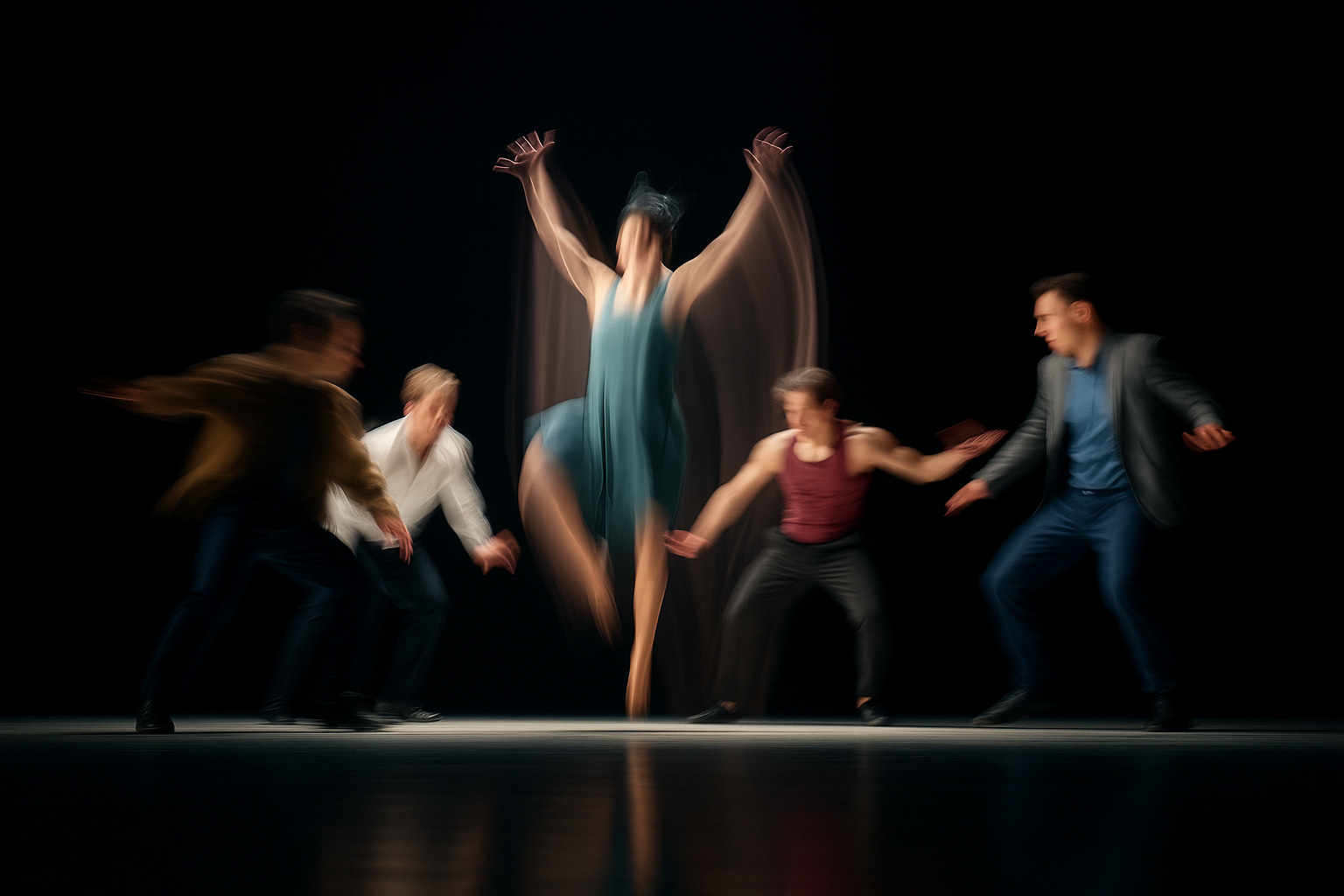
They say all the world’s a stage, and all of us merely players.
Maybe.
But maybe being human was never meant to be a performance. Maybe it’s a rehearsal: a practice, messy, unguarded, full of cracked mirrors and crooked paths.
The moment you try to perfect it, you kill it.
This isn’t a manual for arriving. Consider it more like field notes from the departure lounge: a collection of attempts, questions, late-night thoughts, and things I only understand when I speak them out loud.
Welcome to the art of being: broken, unresolved, persistently unfinished, and somehow, despite everything, enough.
We don’t rehearse for perfection. We rehearse because the alternative is death. Or worse, stagnation.
Ask anyone who’s ever been on stage: when do they feel most alive? During the show, when the spotlight demands polish? Or during rehearsal, when the breath is still unsteady, when the mistakes reveal more than the victories, when something real is still happening?
Almost always, it’s the rehearsal. Because rehearsal doesn’t lie. Rehearsal doesn’t pretend. Rehearsal is where you still belong to yourself.
It’s also where you learn how to give and receive criticism without dissolving. Where you learn to defend your boundaries without building walls. Where you discover that growth comes not from flawless execution but from the messy, vulnerable practice of showing up when every instinct screams retreat.
Athletes know this truth in their bones. Games are for audiences. Practice is where you find yourself. The scoreboard, the spectators, the highlight reels—those are just moments. But it’s in the repetition, the pre-dawn sweat, the quiet battles no one sees where you actually become. That’s the heart of it: practicing not for applause, but for alignment.
This life isn’t a polished performance. It’s a badly controlled experiment. A chaotic laboratory where we test, crash, burn, rise, and learn.
To be is to live in perpetual process, never product. To experiment with breath and bruises and grace, knowing the aim was never perfection, only presence.
We don’t all hear the same rhythm. And that’s not the failure. That’s the beauty.
Some of us move to industrial beats. Others to cosmic whispers. Some dance to the syncopated rhythms of anxiety. Others to the slow dirge of grief. Some of us hear music where others hear only noise. We're not meant to synchronize perfectly. We're meant to create something far more interesting: counterpoint, harmony, dissonance that resolves into unexpected beauty.
Living fully means dancing between art and science. Between the intuitive brushstroke and the clinical hypothesis. Between the right brain’s wild leaps and the left brain’s careful mapping. Between improvising truth and testing its bones.
Some days, being feels like jazz: messy, improvisational, full of wrong notes that somehow make the whole thing more honest. Some days, it feels like classical composition: deliberate, structured, built on foundations that echo through your bones. And most days, it’s both—a strange fugue of instinct and intention, chaos and form.
And sometimes, it’s dance: stepping into the unknown, spinning through shadow, finding your balance again in rhythm with something vaster than yourself. Life rarely follows a script. Sometimes it moves in measures you can’t count but still feel in your marrow.
And that’s the heartbeat of it all. We don’t live by formula. We move. We stumble. We return to the rhythm, not always gracefully, but always honestly.
This isn’t about hustling for worthiness. It’s about recognizing that worthiness was never up for negotiation.
This isn’t about polishing an image. It’s about practicing an existence.
So we begin—not with answers, but with presence. With rhythm. With what it means to be here at all.
About the Author:
Andrew Amazigh applies systems thinking everywhere: from reimagining social structures and regenerating ecosystems to probing consciousness. He champions adaptable resilience over rigid control, exploring the liminal spaces where order becomes chaos and measurement dissolves into mystery. When not writing, he coaxes life from forgotten soil and blissfully ignores messages, finding more truth in decomposition than in most human conversation.
 | A guest post by
|